Portable Door Travel Rules
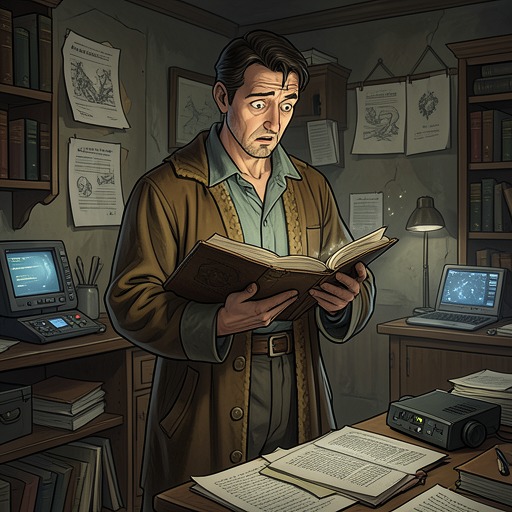
The Portable DoorThe Portable Door offers Paul Carpenter a way through space—and, as he discovers by accident, through time—but it is not a simple escape from ordinary limits. Its journeys require care at the threshold, and what a traveler can bring back is governed by effects Paul cannot readily explain. The door is at once a practical route, an absorbing diversion, and a device whose rules become clearest when something goes wrong.
Journeys and the threshold
Once Paul begins using the Portable Door regularly, he travels to places including Rio, Florence, Nepal, and the Great Wall of China. The novelty of crossing continents gradually becomes an enjoyable way to spend his lunch hour, although his excursions do not make him a familiar face abroad: even when he visits the same Houston coffee shop three days running, the man behind the counter gives no sign of recognizing him. Paul also finds that a journey through the door can leave him exhausted. At first, the fatigue after a long trip threatens to consume the rest of his day; with daily use, it diminishes enough that he can stay away for two hours and still function afterward.
The door’s threshold imposes a concrete requirement: it must be kept open if the traveler expects to return through it. On a moving van journey, Paul slips away while Sophie Pettingell and Mr Wells are asleep, intending to take a brief excursion. He fails to choose a destination before crossing and finds himself back in his office at the J.W. Wells & Co. headquarters (70 St Mary Axe). Because he has not wedged the door open, the van’s movement jars it shut. The opening disappears, leaving him stranded and unable to follow the others. This episode makes both the importance of deciding where to go and the danger of neglecting the door’s physical position unmistakable.
Later, in a corridor with only a small patch of bulkhead available, Paul prepares the door with Mr Tanner’s mum. Her handbag serves as the wedge. After opening the passage, Paul crosses first and shouts that he wants the past. The episode confirms that the destination need not be a place alone: the door can also carry a traveler across time, though the destination must be deliberately specified if the crossing is to be controlled.
What crosses back
Paul’s foreign purchases reveal that passage through the door does not preserve every object or transaction in the same way. At first, he believes he can use his bank card abroad without consequence: repeated withdrawals do not appear on his bank statements, and he concludes that the money he spends may never have to be repaid. That apparent freedom proves partial. After withdrawing fifty pounds in Manchester, he finds the cash gone when he returns to 70 St Mary Axe. A later withdrawal of ten pounds remains in his possession after the crossing, though his balance check shows that the bank has still recorded it. The difference gives him no dependable formula for what will happen to money.
A shopping trip to Paris produces another uneven result. Paul packs his pockets with gold watches, coins, rings, and other valuables. On returning, the added weight and sharp edges vanish; his pockets contain only ordinary belongings, including keys, a dead biro, tissues, and a boiled sweet. The tissues survive despite having been bought at the same time as the gold. His experiments therefore show that valuable goods may fail to cross back while an ordinary purchase does, without revealing a consistent principle that would let him predict the outcome.
Food and drink behave differently again. Paul can eat lavishly abroad without affecting his appetite when he returns, and his meals do not make him gain weight. But the food provides no nutrition, so he still has to eat at the office. Alcohol, like money, appears unable to travel back through the door. The portal can make a meal or drink part of the excursion, but not a substitute for what sustains him at home.
The door as diversion and temporal passage
For Paul, the door initially becomes more than transport. While he is away, he forgets the distress of sharing an office with Sophie; once he returns, he resumes the same unresolved thoughts. The excursions are pleasurable, but their pleasures do not alter his working life or his attachment to her. They remain a holiday squeezed between spreadsheets and the journey back to Kentish Town, and he recognizes that he would trade the door for one of the lunches he once shared with Sophie.
Its ability to cross time becomes apparent after Paul accidentally returns to the previous day. At first he tries to repeat the day’s events exactly, only to find that remembered lines no longer reliably produce the same replies or cues. The next day, carrying the door through time, he realizes that it must have sent him not only through space but also into the past. He imagines using it to revise mistakes, but concludes that it cannot change the essential fact of who a person is. The door can alter where and when Paul finds himself; it does not grant precise control over the consequences or over the people he cares about.
Locks, keys, and limits on access
The Portable Door’s passage can also be restricted by its lock. When Pip and Arthur experiment with it in the strongroom, they read the instructions, spread the door against the wall, open it, and wedge it with a heavy book. They command it to take them only as far as their lodgings, and the destination is correct. But the real door out of their rooms is missing. Humphrey Wells then shuts the magical doorway, which vanishes and leaves them trapped in a room without an exit. The door has conveyed them to the requested place without guaranteeing that the destination will offer a way out.
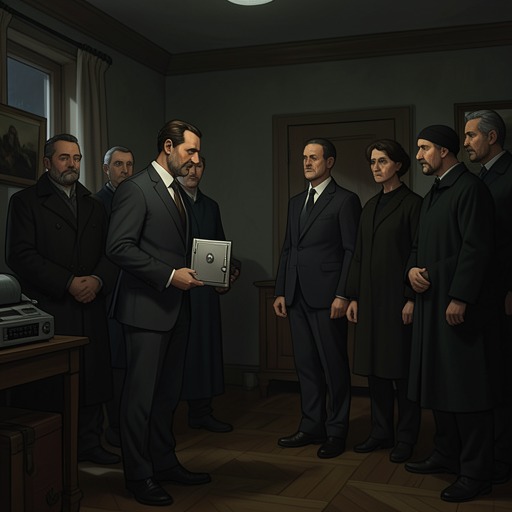
The lock requires two keys, and Mr Tanner’s mum expects them to be disguised or obtainable only by passing a test. Paul recognizes the possibility of a fairy-tale test and applies that idea to a sword in a stone: with Sophie’s help, he draws the blade smoothly and finds its tip blunt and crinkled like a key’s wards. He snaps off the key-shaped portion and leaves the sword in place. The discovery turns a familiar legendary object into a practical key, while showing how the door’s access rules can depend on solving a puzzle rather than merely finding a handle.
Taken together, these episodes make the Portable Door’s rules experiential rather than fully systematic. It can reach distant places and the past; travelers must attend to destination and the open threshold; and money, goods, food, drink, and fatigue respond differently to crossing. Its paired-key lock adds a further boundary between the ability to travel and the ability to enter or escape. The door promises extraordinary mobility, but each journey remains subject to conditions that Paul learns by testing—and sometimes by being caught out.